

Intussusception in Children: What Parents Should Know
What Is Intussusception?
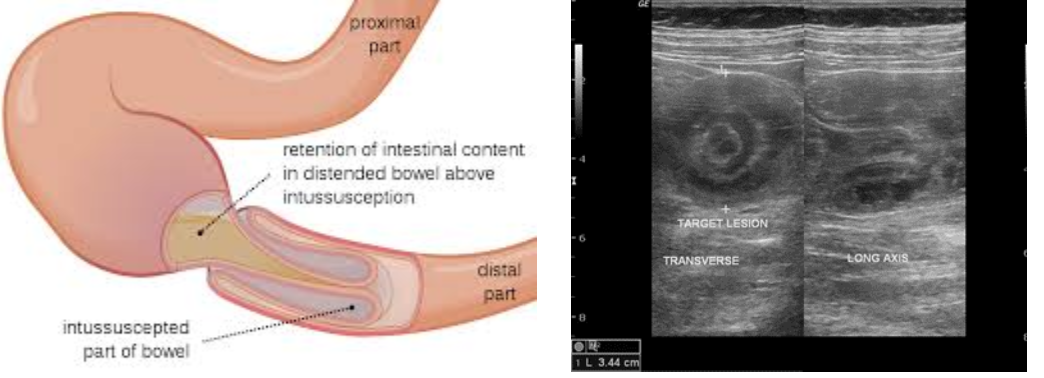
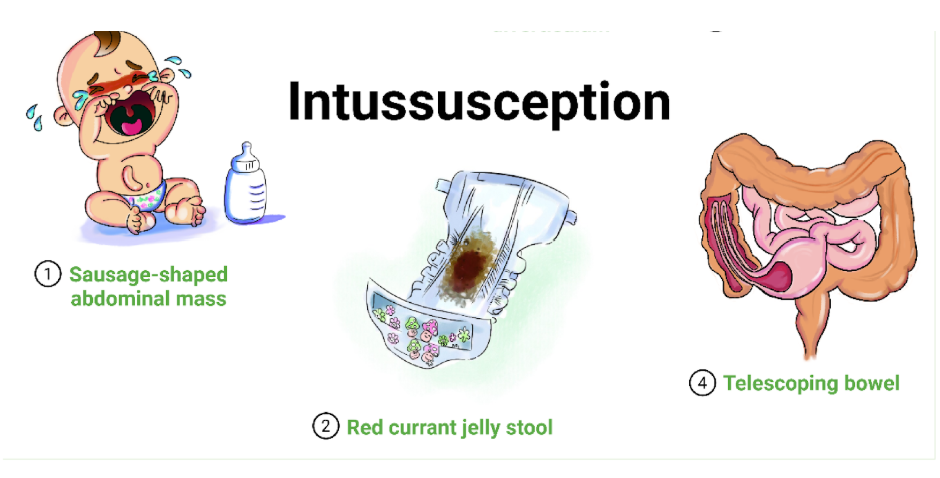
Intussusception occurs when one part of the intestine slides into another, like a telescope folding in. This causes a blockage and can cut off blood supply to part of the bowel.
Why does Intussusception happen?
Intussusception can happen when the intestine gets irritated or inflamed—such as after a viral infection or stomach bug. Sometimes a small lump in the intestine (like a lymph node) acts as a trigger point. As a result, one part of the bowel slides into another, like a telescope.
How Do I Know If My Child Has It?
- Sudden, severe, intermittent episodes of abdominal pain (child cries, curls up)
- Vomiting (may become green)
- Red or jelly-like stool (mixed with blood and mucus)
- Lethargy between pain episodes
- Swollen or tender abdomen
When Should I Be Concerned?
- Severe or repeated abdominal pain
- Vomiting with greenish fluid
- Bloody or jelly-like stool
- Child unusually sleepy or pale
Why Is Treatment Important?
Without treatment, the affected bowel can lose blood supply, become damaged, or rupture. Prompt diagnosis and intervention are key to preventing serious complications.
What Is the Treatment?
Initial treatment is usually with an air or hydrostatic enema to reduce the telescoped bowel.
- If enema is unsuccessful, surgery is required to manually reduce the bowel
- Any non-viable bowel is removed during surgery
- Most cases are treatable if caught early
Recovery After Treatment
- Hospital stay for observation (1–2 days if enema, longer if surgery)
- Gradual return to feeding
- Monitoring for recurrence (rare)
- Good outcomes with timely care
Why See a Paediatric Surgeon?
Dr. Daniel provides urgent care and expertise in managing intussusception, both in non-surgical management (radiological aided reduction) & especially when surgery is needed. His approach ensures a safe, swift return to health.