

Undescended testes in children, what parents should know

Noticed left hemiscrotum is empty – this is an undescended testis
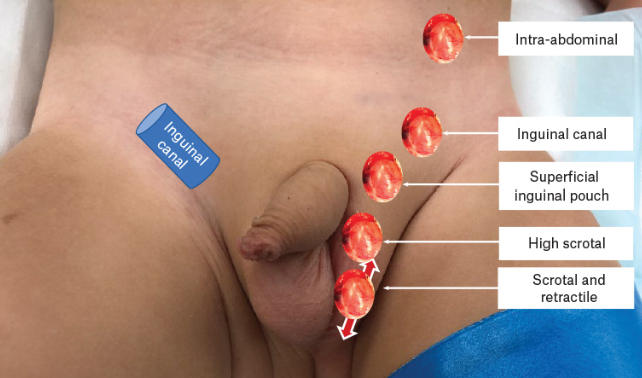
The usual location of testis when not found in scrotum.
What Are Undescended Testes?
An undescended testis is when one or both testicles are not located in the scrotum. Instead, the testicle may be found in the groin or lower abdomen, or sometimes may not be felt at all.
This condition is fairly common in newborn boys and may correct itself in the early months. However, if it does not descend by a certain age, surgical correction is advised.
How Do I Know If My Son Has This?
- One side of the scrotum looks empty
- The doctor may not feel the testicle during a checkup
- In some cases, the testicle may move up and down (retractile)
Only a proper clinical assessment can determine whether it’s truly undescended or retractile.
When Should I Be Concerned?
- If the testicle has not descended by 6–12 months of age
- If only one testicle is visible
- If your child complains of groin pain, especially during activity
- If the testicle cannot be felt at all
Why Is Treatment Important?
If left untreated:
- Higher risk of twisting (torsion)
- Increased chance of injury
- Fertility may be affected
- May increase the risk of testicular problems (testicular cancer) later in life
What Is the Treatment?
The recommended treatment is a minor surgery called orchidopexy, where the testicle is gently brought down and fixed in the correct position.
- Usually done as a day procedure
- Minimally invasive (laparoscopic) options available if testicle is not felt in the groin
- The earlier it’s done (ideally before 12 months old), the better the outcome
What Is Recovery Like?
- Most children go home the same day
- Light activity in 1–2 days
- Full recovery in about a week
- Very low risk of recurrence
Why See a Paediatric Surgeon?
Dr. Daniel is experienced in managing undescended testes in children, using both open and laparoscopic techniques. Treatment is tailored to your child’s specific anatomy and age.
Choosing a paediatric surgeon ensures:
- Gentle handling of delicate structures
- Accurate diagnosis and safer outcomes
- Reduced long-term complications